For plant owners planning steam turbine overhaul in Indonesia, the most useful starting point is a clear decision about scope. A quotation that simply says “major overhaul” does not establish which components will be inspected, which repairs are included, or how unexpected findings will be approved.
The outage plan should connect operating evidence, component condition, parts readiness and return-to-service requirements. This guide explains how to build that connection before committing to a shutdown window. It is a planning framework; equipment-specific inspection methods, acceptance limits and work instructions must follow the applicable OEM documentation and the responsible engineering team.
1. Define the reason for the outage before defining the work
Start with the plant objective: scheduled condition assessment, investigation of a recurring symptom, restoration after a defect, or a planned modification. Record the turbine manufacturer, model, serial number, rated capacity, generator arrangement and previous overhaul history. A unit’s capacity alone is not enough to establish its maintenance scope.
Prepare an operating evidence pack: vibration trends with operating conditions, bearing temperatures, relevant alarms, oil-system records, steam conditions and vacuum observations. Include previous inspection reports, repair records and current drawings. An isolated vibration reading or a photograph of deposits can identify a question to investigate, but cannot establish the repair required.
For example, elevated bearing temperature should lead to a defined assessment of the relevant bearing, lubrication and operating conditions. It should not automatically become an instruction to replace the bearing. Likewise, an increase in vibration does not, by itself, justify rotor dynamic balancing. Agree what evidence the inspection and diagnostics team needs before selecting corrective work.
2. Separate the base scope from conditional repairs
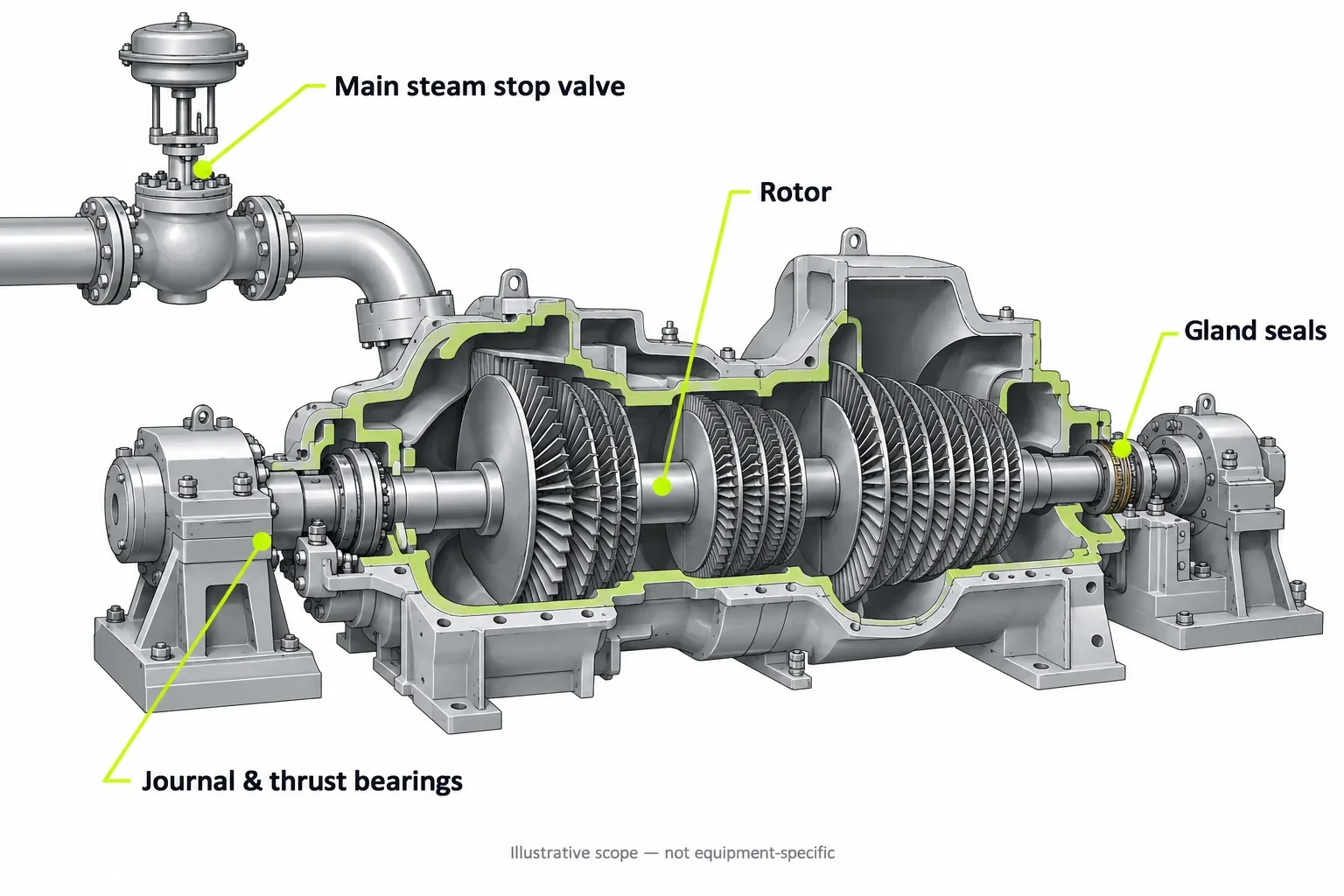
Figure 1. Conceptual steam turbine overhaul scope. Component arrangements vary by unit; use the applicable drawings and engineering requirements.
A practical steam turbine overhaul scope has three layers. The base scope identifies agreed dismantling, inspection, measurements, reassembly and records. Conditional work covers repairs or replacement that require inspection evidence and approval. Exclusions identify work outside the quotation, including any specialist testing, workshop transport or generator work that is priced separately.
Casing, steam path and rotor: define the accessible inspection areas, required records and the engineering decision needed if damage or abnormal clearances are found.
Journal and thrust bearings: distinguish condition assessment from bearing repair or replacement. Identify the drawing and acceptance criteria that govern the decision.
Gland seals, shaft sleeves and blades: distinguish cleaning and inspection from replacement. Confirm the exact component identity before ordering parts.
Main steam stop valve and governing components: define whether assessment of reported seat leakage, stem-seal leakage or operating problems is included.
Generator and auxiliaries: state their scope separately, including relevant electrical tests, oil systems, turning gear and condenser-related investigations.
This separation makes steam turbine overhaul services easier to compare. Two prices are only meaningfully comparable when inspection coverage, repair allowances, site responsibilities and deliverables describe the same work.
3. Plan spare parts around identification and uncertainty
Divide the parts list into confirmed replacements, inspection-dependent replacements and routine consumables. For each item, record the manufacturer, equipment identity, part number or drawing revision, quantity, specification status and required arrival date. A photograph is useful supporting information, but should not replace a drawing or technical compatibility review.
For steam turbine spare parts, pay particular attention to blades, gland seals, shaft sleeves, journal and thrust bearings, oil deflector rings and valve components. Similar-looking parts may differ in material, geometry, fit or application. Do not treat a supplier’s generic catalogue description as confirmation that a component matches your unit.
For an inspection-dependent item, agree the contingency before dismantling: who confirms the finding, what information permits a quotation, whether a workshop repair is feasible, and how delivery affects the outage sequence. For Indonesian sites, include transport to the actual plant location, receiving inspection, storage and any required import documentation in the responsibility plan. Availability and delivery dates require supplier confirmation.
4. Build the schedule around decisions, not just manpower
Figure 2. Five stages of decision-led outage planning. Agree the records, responsibilities and acceptance criteria before work begins.
Adding people cannot remove every outage constraint. An engineering approval, unavailable component, workshop activity or shared lifting resource can hold the next stage even when the mechanical team is ready. Ask for a schedule that identifies these dependencies and the person responsible for releasing each one.
Agree four decision gates: readiness before shutdown; review of findings after inspection; release of the corrective scope before reassembly; and verification before return to service. Each gate should have required records, an approver and an escalation route. Define how additional work will be quoted and accepted, including its effect on price and completion date.
Request a daily report that distinguishes completed work, open findings, customer decisions and activities affecting the critical path. A progress percentage without the unresolved decisions can hide the real completion risk.
5. Keep turbine and generator responsibilities connected
A turbine overhaul does not automatically include a generator overhaul. Confirm whether the generator’s mechanical inspection, insulation assessment, excitation-related checks and agreed electrical testing are covered. Identify who coordinates coupling-related work, alignment records and the final verification sequence across both machines.
If there are reported slip ring and carbon brush problems or a rotor winding earth-fault, include the available operating and test records in the brief. These findings require assessment by qualified specialists. The generator overhaul scope should state the investigation and approval process rather than promise a particular repair before diagnosis.
6. Specify the handover evidence before work begins
Agree the expected handover package when reviewing the quotation. It should identify inspection findings, measurement records, approved corrective actions, replaced-part references, reassembly and alignment records, and applicable test results. Record outstanding restrictions or follow-up work explicitly.
Return-to-service acceptance should use the agreed equipment-specific criteria, test programme and authorised plant approval. Avoid a vague promise that the unit will be “as new”. A completed overhaul needs traceable evidence of what was inspected, what changed and how the accepted condition was verified. See our overhaul procedure for the sequence from preparation to handover.
An illustrative planning decision
Consider a hypothetical plant reporting recurring vibration and an approaching planned shutdown. The initial enquiry requests rotor balancing. A better brief supplies the vibration history, load and temperature conditions, previous alignment records and maintenance findings, then requests a defined diagnostic scope. The engineering review may recommend balancing, another corrective action or further investigation. This example illustrates a purchasing decision; it is not a diagnosis or a completed customer case.
Questions to resolve before requesting a quotation
How long will the overhaul take? Request a schedule based on the unit, agreed scope, parts readiness and conditional-work assumptions. There is no universal duration established by this article.
Should all seals and bearings be replaced? Confirm the OEM requirements and inspection-based decisions for the actual components. Separate planned replacements from contingencies.
Can repairs be decided after opening the turbine? Yes, where condition assessment is necessary, but agree the evidence, approval authority and commercial process in advance.
Prepare your steam turbine overhaul enquiry
To discuss an outage with TURBINE OVERHAUL INDONESIA, send the equipment manufacturer and model, capacity, main symptoms, previous maintenance information and planned shutdown window. Include drawings and part references where available. Ask for a proposal that separates the base scope, conditional repairs, parts responsibilities and verification deliverables.
Discuss your turbine-generator overhaul project so the technical review can start with your unit’s actual requirements.
Technical reference
GE Vernova’s steam plant outage planning guidance discusses scope definition, parts and tooling, preparation for emergent work and regular decision checkpoints. The framework above applies those planning themes to an owner’s enquiry. The reference does not imply OEM authorisation, partnership or equivalent capabilities for our companies.